

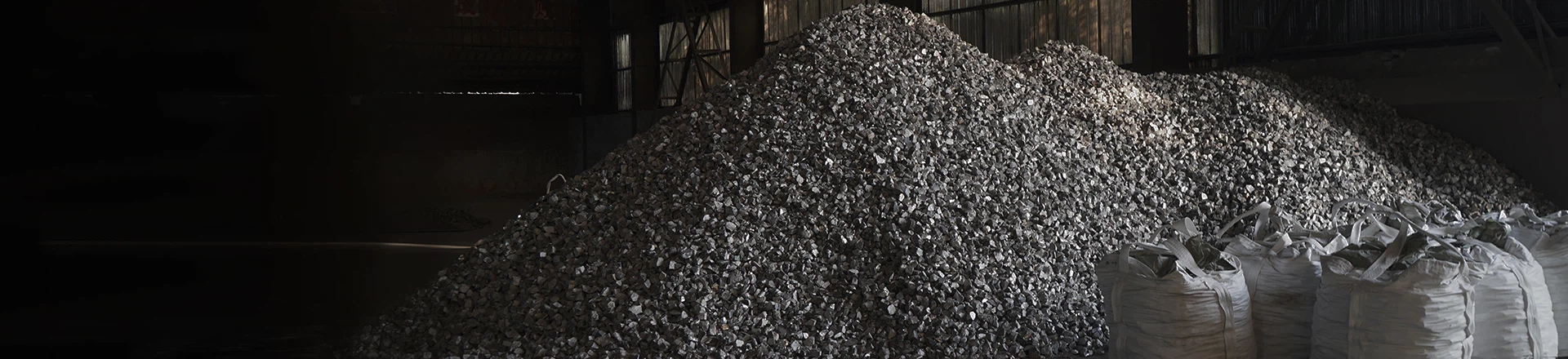
The industrial silicon market is greatly influenced by the automotive industry in a particular region or country. This is because silicon aluminum alloy, which is widely used in the aluminum alloy industry, plays a crucial role in the manufacturing process. As a strong composite deoxidizer, silicon aluminum alloy replaces pure aluminum, thereby enhancing the efficiency of deoxidation and improving the overall quality of steel in steelmaking. Additionally, this alloy's ability to purify molten steel further enhances the steel's end properties. The demand for industrial silicon, specifically for aluminum applications, is particularly significant in the automotive industry and various other sectors. This highlights the significant impact of automotive industry development on the fluctuation of the industrial silicon market.
Industrial silicon is employed not only as an additive in non-ferrous alloys but also as an alloying agent in silicon steel, requiring stringent specifications. Furthermore, it is utilized as a deoxidizer during the smelting process of special steel and non-ferrous alloys.
Silicones play a vital role in the chemical industry as they are utilized to manufacture various products such as silicone rubber, silicone resin, silicone oil, and other derivatives. One notable application of silicone rubber lies in its exceptional elasticity and ability to withstand high temperatures, which makes it an ideal material for producing medical supplies and high temperature gaskets. On the other hand, silicone resins find their use in the production of insulating paints and high temperature coatings, adding value to these applications. Meanwhile, silicone oil, known for its consistent viscosity regardless of temperature fluctuations, finds its utility in advanced lubricants, glazing agents, fluid springs, and dielectric liquids. Moreover, it can also be transformed into colorless and transparent liquids, sprayed onto building surfaces as an advanced waterproofing agent. The versatility and properties of silicones make them an indispensable part of the chemical industry, serving numerous technological and practical purposes.
Polysilicon and monocrystalline silicon, which are derived from industrial silicon after a series of purification processes, play crucial roles in the photovoltaic industry and the electronics industry. These materials find extensive application in solar rooftop power stations, commercial power stations, and urban power stations where land costs are high. With their remarkable growth rate, crystalline silicon cells have emerged as the most mature and widely adopted solar photovoltaic products worldwide, capturing over 80% of the global market. Furthermore, the significance of high-purity metalloid silicon cannot be undermined as it forms the backbone of modern large-scale integrated circuits and serves as a primary raw material for optical fiber production. In essence, metalloid silicon has established itself as a fundamental pillar industry in the information age.


