



Silicon Metal
High quality products:We adhere to the use of high-quality raw materials and adopt advanced technology and strict quality control to ensure that the supplied ferroalloy products meet international standards and customer needs.
Fast delivery:We have a strong supply chain and logistics network that can deliver products to customers in the shortest possible time and provide timely tracking services to ensure that customer needs are met.
Personalized customization:We can customize production and packaging according to the specific needs of our customers, to meet the needs of various applications and markets, and provide the best solutions for our customers.
Professional team support:We have an experienced and technically proficient team that can provide customers with comprehensive technical support and consulting services, answer various questions, and provide professional opinions.
Sincerely follow customers:We respect the needs and opinions of our customer wholeheartedly serve them, and establish long-term cooperative relationships to become a trusted supplier for our customers.
What is Silicon Metal?
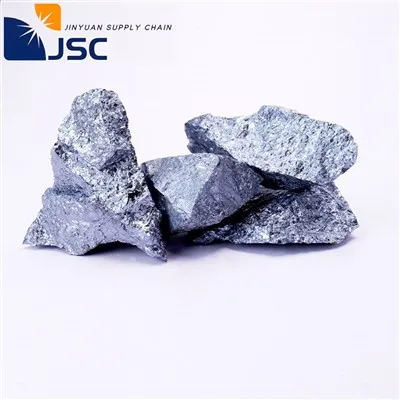
Silicon metal is a grey and lustrous semi-conductive metal that is used to manufacture steel, solar cells, and microchips. Metallic silicon, also known as industrial silicon or crystalline silicon, is usually produced by reducing silicon dioxide with carbon in an electric furnace. Its main use is as an additive to non-ferrous alloys and as a starting material for the production of semiconductor silicon and organic silicon.




Advantages of Silicon Metal
Unique crystal structure:The crystal structure of silicon metal is diamond-shaped. This structure causes each silicon atom to form a dense tetrahedral structure with four adjacent silicon atoms. This structure gives metallic silicon high hardness, high strength and good thermal stability.
Good electrical conductivity:Although silicon metal is not a metal in the traditional sense, it has electrical conductivity similar to that of metal. The outer electrons of silicon atoms can be easily conducted within it, which makes metallic silicon a good semiconductor material widely used in the electronics industry.
High-temperature stability:Silicon metal has a high melting point (about 1414 degrees Celsius) and good oxidation resistance, which allows it to maintain stability and strength in high-temperature environments. Therefore, metallic silicon is often used in the manufacture of high-temperature stoves, refractory materials, and aerospace devices.
Easy to process and shape:Metal silicon has good ductility and plasticity and can be processed into products of various shapes and sizes through casting, rolling, extrusion and other processes. This makes metallic silicon an easy-to-process and shape material that is widely used in manufacturing various structural parts and components.
Wide range of applications:Due to the unique properties mentioned above, silicon metal has wide applications in many fields. For example, in the electronics industry, metallic silicon is used as a semiconductor material; in the chemical industry, it is used as a catalyst and reducing agent; in the metallurgical industry, it is used as a deoxidizer and alloying element, etc.
Application of Silicon Metal
Aluminum alloy industry
It's extensively used in producing silicon-aluminum alloys, the most widely consumed silicon alloys. These alloys serve as potent composite deoxidizers, enhancing deoxidizer efficiency in steelmaking when replacing pure aluminum. They also purify molten steel, elevating steel quality. The demand for silicon metal in industries such as automotive, heavily reliant on aluminum, significantly impacts the market dynamics of silicon metal based on regional or national automotive industry developments.
Non-ferrous alloy additives
silicon metal is employed as a crucial alloying agent for strict requirements in silicon steel and as a deoxidizer for smelting special steels and non-ferrous alloys.
Chemical industry
It's utilized in producing organic silicon materials like silicone rubber, silicon resin, and silicon oil. Silicone rubber boasts good elasticity and high-temperature resistance, used in manufacturing medical supplies and high-temperature gaskets. Silicon resin is employed in producing insulating varnishes, high-temperature coatings, etc. Silicon oil, with minimal viscosity changes in response to temperature, is utilized in producing advanced lubricants, finishing agents, fluid springs, and dielectric fluids, and can be processed into colorless, transparent liquids used as high-grade waterproof coatings sprayed on building surfaces.
Photovoltaic and electronic industries
Following purification processes, silicon metal yields polycrystalline silicon and monocrystalline silicon, essential for the photovoltaic and electronic industries. Polycrystalline silicon cells are extensively used in solar power systems like rooftop installations, commercial stations, and urban setups with high land costs. They dominate the global photovoltaic market with over 80% market share, substantially accelerating demand for metallurgical silicon. Almost all modern large-scale integrated circuits are produced from high-purity quasi-metallurgical silicon. Moreover, high-purity quasi-metallurgical silicon remains a primary raw material for manufacturing optical fibers, establishing itself as a foundational pillar in the information age industries.
What Are the Different Grades of Silicon Metals?
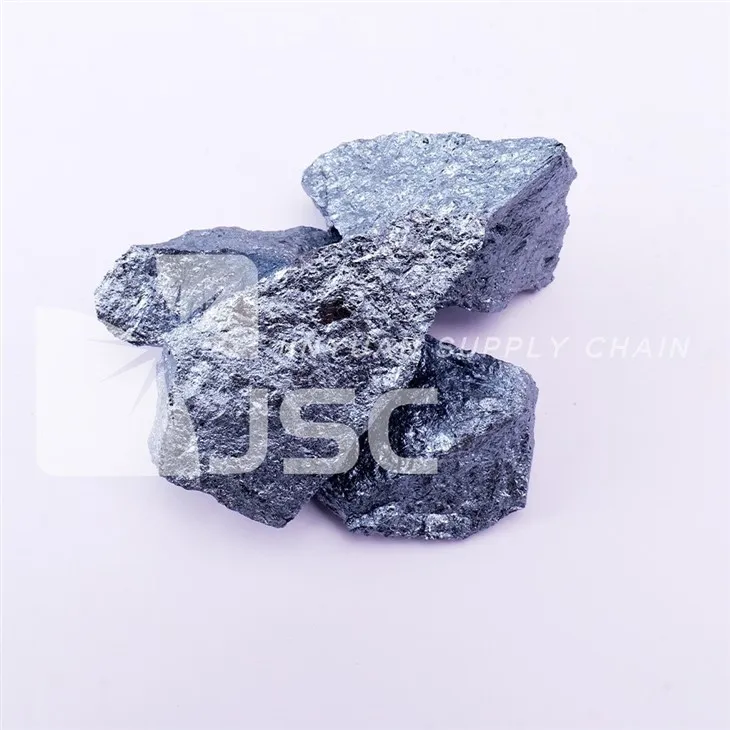
The classification of metallic silicon is usually classified according to the content of iron, aluminum and calcium,silicon metal is rich in silicon and is widely used in steel making, casting foundry, aluminium ingot production, purification and other industries.The content of different silicon metal grades varies and their applications are very different. The main common grades of silicon metal are 441, 553, 3303 and 2202, but in addition to these grades there are some lesser known grades, such as 421, 411 and 1101. Metal silicon 441, 553 is mainly used for smelting in aluminum foundries.They can improve the already useful properties of aluminum such as castability, hardness and strength. Adding silicon metal to aluminium alloys makes them strong and light.Therefore, the sales of metal silicon 441 and 553 account for a relatively large proportion in the market.
The Difference Between Silicon Metal 553 and Silicon Metal 441
Metallic silicon is usually classified according to the content of its three main impurities: iron, aluminum, and calcium. According to the percentage content of iron, aluminum, and calcium in metallic silicon, metallic silicon can be divided into different grades such as 553, 441, 421, 3303, 2202, and 1101. For example, 553 represents the content of iron-aluminum-calcium in metallic silicon as 0.5%, 0.5%, and 0.3%; 441 represents the content of iron-aluminum-calcium in metallic silicon as 0.4%, 0.4%, and 0.1%.
Specifically, metallic silicon is obtained by the high-temperature reaction of quartz and carbon in a submerged arc furnace: SIO2+C=SI+CO2. Quartz can be of poor quality or good quality, and carbon as a reducing agent can also be of poor quality or good quality. The difference in these raw materials determines the purity of industrial silicon.
Therefore, the essential difference between metallic silicon 441 and metallic silicon 553 is that the purity content is different and the price is different; The silicon content of metallic silicon 553 is ≥98.7%, while the silicon content of 441 is ≥99.1%; the higher the quality of the raw materials, the higher the price of the manufactured products.
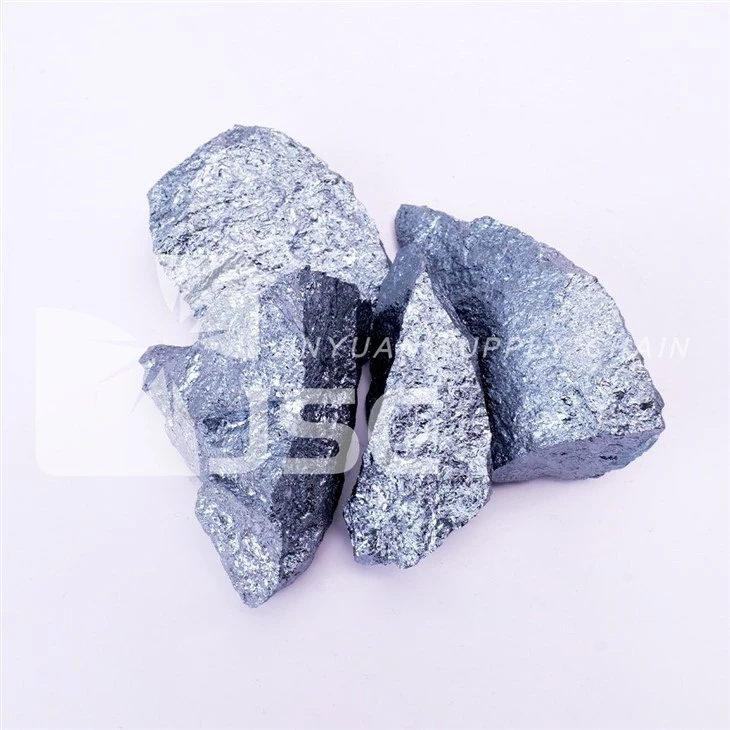
Number of Applications for Silicon Metal to Drive Market
Wafers of silicon are typically manufactured with the help of polysilicon, a by-product of silicon metal. Wafers made of silicon are the primary material used to produce integrated circuits, which are the structural backbone of most modern electronic devices. These devices include everything from consumer electronics to electronic systems used in industry and the military. Automakers have been forced to concentrate on developing their designs for electric vehicles due to the proliferation of electric vehicles in the mainstream automotive market. It is anticipated that this trend will lead to an increase in the demand for automotive electronics, which are expected to offer novel opportunities for the market for semiconductor-grade silicon metal. The rollout of 5G networks has been gaining steam in the telecommunications industry. In addition, developments in autonomous vehicles and the Internet of Things (IoT) have increased the demand for integrated circuits based on silicon.
Specific Issues for Silicon Metal
Silicon metal is absolutely necessary to the production of aluminium and chemical products since it provides them with essential properties. A wide range of modern technologies depend on this material.
Silicon metal cannot be substituted and there is no recycling of (pure) Silicon. Few pilot projects in France and Germany are recovering silicon metal from solar applications and we see a growing demand as solar panels are now getting into their end-of-life stage.
Growth in the silicon metal market is expected to continue in the coming years, led by increased demand from regular aluminium and chemical applications, fast growing solar industry, and promising battery market demand.
There is no level playing field between the EU and its main competing regions in terms of policy in the energy, climate and environment fields. European Silicon metal producers are faced with fierce and often unfair competition from third countries although their production is the most environmental and climate friendly worldwide The still existing Europe-based commodity production must be preserved if the EU wants to avoid exposing its main economic value chains and sectors to a total dependence vis-à-vis external raw materials supply.
What Is the Difference Between Silicon Metal with Oxygen and No Oxygen?
Silicon Metal is a silicon material with a purity of up to 99.999% and is widely used in solar photovoltaics, semiconductors, integrated circuits and other fields. In the production process of industrial silicon, there are two process methods: oxygen and no oxygen.Oxygen is to pass oxygen in the heating furnace, and the raw silicon is processed into silicon single crystal or polycrystalline silicon through a redox reaction; oxygen is not to be processed without adding oxygen. The difference between passing oxygen and not passing oxygen is that passing oxygen can increase the speed and depth of the redox reaction, which is beneficial to the removal of impurities and the improvement of the quality of the silicon body.Failure to pass oxygen may lead to an increase in impurity content, affecting the quality and performance of industrial silicon.

How Is Silicon Metal Smelted?
The production of metal silicon adopts the carbothermal method, that is, the method of smelting in submerged arc furnaces with silica and carbonaceous reducing agents. The silicon obtained in this way has a purity of 97% to 98%, and such silicon can generally be used in metallurgical applications. If higher-grade silicon is to be obtained, it needs to be refined to remove impurities to obtain metallic silicon with a purity of 99.7% to 99.8%.
The smelting of metal silicon with quartz sand as raw material includes several steps of quartz sand block making, preparation of charge and submerged arc furnace smelting.
Generally speaking, high-quality quartz sand will be directly used to produce high-grade quartz glass products, and even be processed into gem-level products such as crystals and tourmalines. The grade is slightly lower but the reserves are larger, the mining conditions are slightly better, and the surrounding electricity is cheaper, which is suitable for the production of metal silicon.
At present, the production process route of the carbothermal method for the production of metal silicon in China: silica is generally used as raw material, petroleum coke, charcoal, wood chips, low ash coal, etc. Metal silicon is reduced, which is a slag-free submerged arc high-temperature melting process.
Therefore, although metal silicon is extracted from silica, not all silica is suitable for making metal silicon. The ordinary sand we see in our daily life is not the real raw material of metal silicon, but the above-mentioned quartz sand used in industrial production, and it has undergone multi-step reactions to complete the transformation from sand to metal silicon.
Chemical Composition of Silicon Metal
Among the metal silicon, silicon is the main element, and it can often reach 97%-99.79%. The other elements are iron, aluminum and calcium. Metal silicon is divided into different grades because of different needs. Such as 553, 441, 3303, 2202, and so on. Metal silicon grade specifications>>
These grades are named according to the difference in the content of ferro, aluminum and calcium in the silicon metal. Take 553 as an example:
The chemical element of the metal silicon 553 has an ferro content of 0.5%, an aluminum content of 0.55%, a calcium content of 0.3%, and a silicon content of 98.5%.
After reading this example, I believe that many people have a certain understanding of the naming of the brand. I won’t say more here.
The main downstream of metal silicon includes silicon alloy, silicone, and polysilicon. In terms of alloys, metal silicon is used to produce silicon aluminum alloy, copper silicon alloy, and silicon steel. High-silicon aluminum alloy is a binary alloy composed of silicon and aluminum. It is a promising electronic packaging material, especially in high-tech fields such as aerospace, space technology and portable electronic devices.
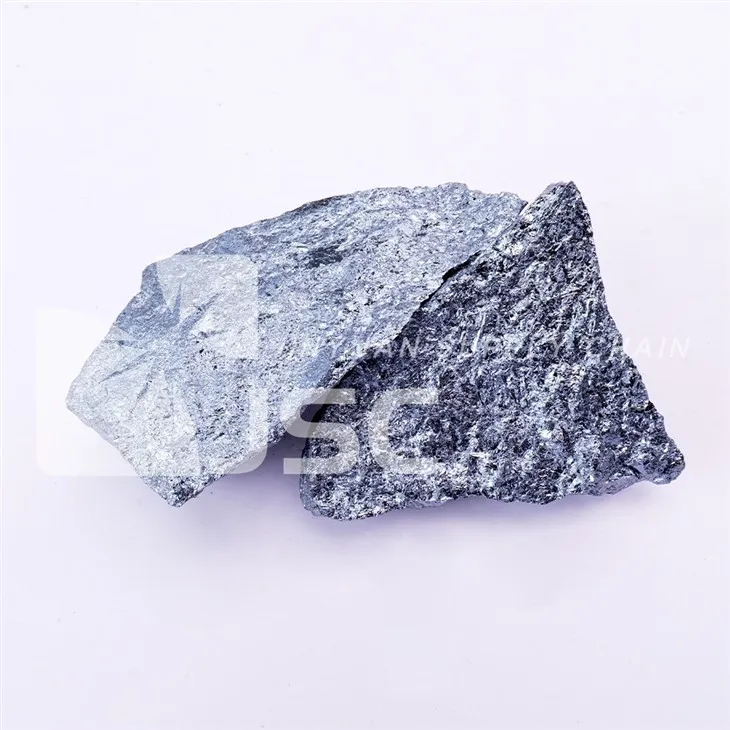
Criteria for Judging the Quality of Silicon Metal
The phosphorus content of metallurgical coke used for ironmaking should be below 0.02-0.03%.
The ash content of metallic silicon has a very significant impact on blast furnace smelting. The ash content of metallic silicon increases by 1%, and the dosage of metallic silicon increases by 2-2.5%. Therefore, it is very necessary to reduce the ash content of metallic silicon.
The maturity of metallic silicon can be judged based on the volatile content of metallic silicon. If the volatile matter is greater than 1.5%, it means coke is raw; if the volatile matter is less than 0.5-0.7%, it means it is overcooked. Generally, the volatile matter of mature metallurgical coke is about 1%.
Fluctuations in moisture will cause inaccurate measurement of metal silicon, causing fluctuations in furnace conditions. In addition, the increase in the moisture content of metal silicon will cause M40 to be higher and M10 to be lower, which will bring errors to the drum index.
The particle size of metallic silicon is also very important in blast furnace smelting.
Storage Precautions for Silicon Metal
The storage of silicon metal requires attention to the following aspects:

Storage environment
Silicon metal is an easily oxidized substance, so it should be stored in an environment with good air permeability, suitable humidity, and non-corrosiveness. The most ideal storage conditions are in a dry, ventilated clean room.
Temperature control
The storage temperature of silicon metal is also key. Generally, the storage temperature should be controlled below minus 20 degrees Celsius, which can effectively extend the service life of metal silicon.
Packaging and labeling
For industrial silicon, it can be polished and put into plastic bags, with one piece in each bag. Then, put the plastic bag containing industrial silicone into the cardboard box, and make sure there is enough space in the upper part of the box to place some moisture-proof silicone. In addition, the quantity, model, batch and other information should be marked on the surface of the box to facilitate management and tracking.
Storage time
The storage time of silicon metal should not be too long. It is best to use it within 3 months to avoid being piled in the warehouse for a long time.
Certifications


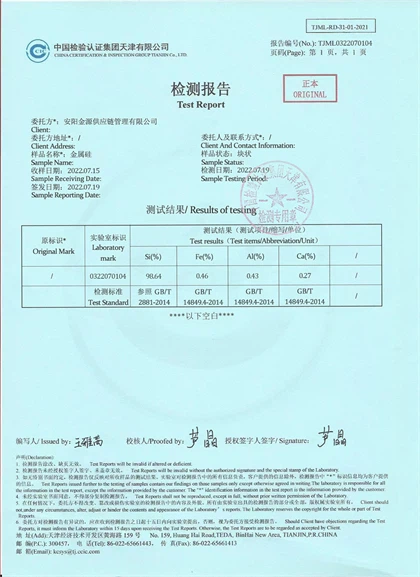
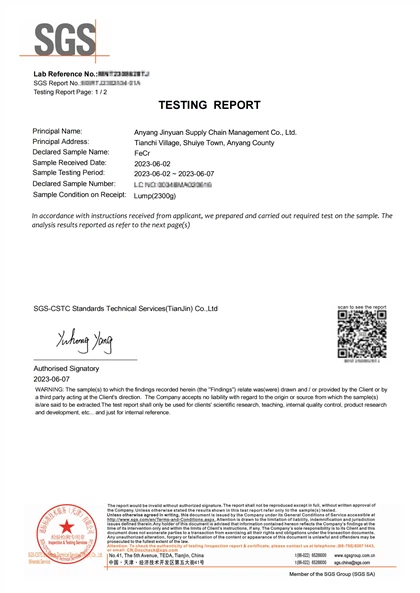
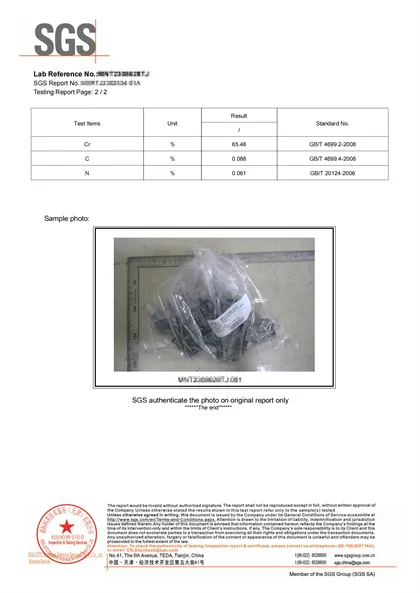

Anyang Jinyuan Supply Chain Management co., Ltd was established in 2021s. It covers an area of 30,000 square meters, with registered capital of 1,638,880 dollars, liquid capital of 6million dollars and annual sales of 16 million dollars. We are capable of researching and developing new products independently. For the past years, we have produced many new and special products for clients of steel mills and foundry industries, which satisfy our clients and help us enjoy good comments and higher praise.

Ultimate FAQ Guide to Ferro Silicon
Q: What is the silicon metal used for?
Q: Is silicon a metal or non metal?
Q: Is silicon metal safe?
Q: Is silicon metal strong?
Q: What are 5 common uses for silicon?
Q: What are 4 common uses of silicon?
Q: What is the difference between silicone and silicon metal?
Q: Is silicon flammable or non flammable?
Q: What everyday item is made of silicon?
Q: Why is silicon useful to humans?
Q: What's the difference between silicon and silicone?
Q: Is silicon good for steel?
Q: Which is better silicon or steel?
Q: Is silicon steel a magnetic material?
Q: What happens when silicon is burnt?
Q: What is the most common use for silicon?
Q: What foods are high in silicon?
Q: Why is silicon so special?
Q: Is silicon natural or man made?
Q: What's the difference between silicon and silicone?