

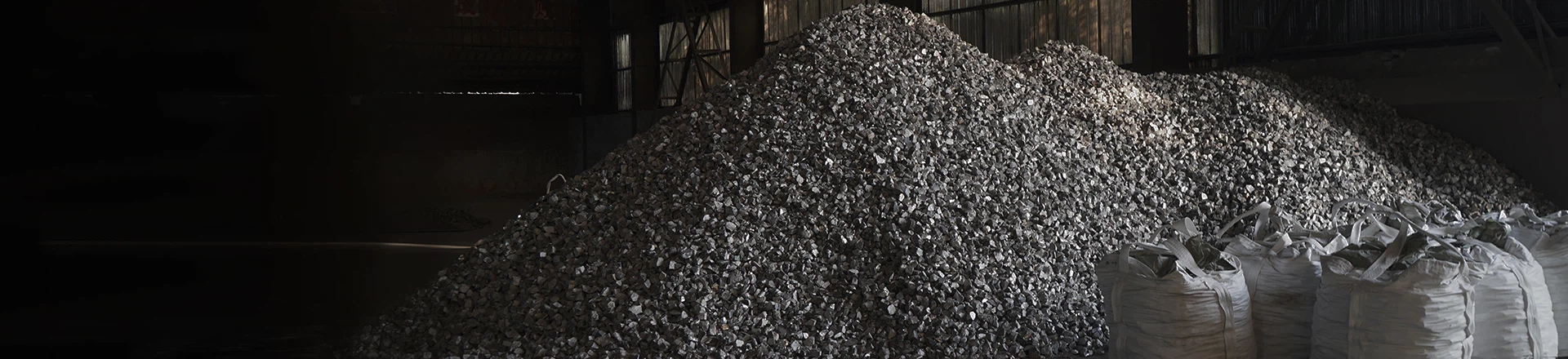

Raw Materials For The Production Of Graphite Are Petroleum Coke, Needle Coke And Coal Pitch
Petroleum coke is a combustible solid product obtained from petroleum residues and petroleum asphalt through coking. It is black, porous, primarily composed of carbon, and has a very low ash content, generally below 0.5%. Petroleum coke belongs to the category of easily graphitizable carbons and finds wide applications in industries such as chemical engineering and metallurgy. It serves as a major raw material for manufacturing artificial graphite products and carbon products used in aluminum electrolysis. Petroleum coke can be categorized into raw coke and calcined coke based on the temperature of thermal treatment. The former, obtained through delayed coking, contains a large amount of volatile matter and has low mechanical strength, while the latter is derived from the calcination of raw coke. Most refineries in China only produce raw coke, and calcination is primarily conducted within carbon plants.
Petroleum coke can be classified into high-sulfur coke (with sulfur content above 1.5%), medium-sulfur coke (with sulfur content ranging from 0.5% to 1.5%), and low-sulfur coke (with sulfur content below 0.5%), based on its sulfur content. Low-sulfur coke is generally used in the production of artificial graphite products.
Needle coke is a high-quality coke characterized by a distinct fibrous texture, exceptionally low coefficient of thermal expansion, and easy graphitization. When fractured, it splits into slender granules along its fibers (with a length-to-width ratio generally above 1.75). Under polarized light microscopy, its anisotropic fibrous structure can be observed, hence the name "needle coke."
The anisotropy of needle coke's physical and mechanical properties is quite pronounced. It exhibits excellent conductivity and thermal conductivity along the long axis of particles. With a low coefficient of thermal expansion, during extrusion molding, most particles align along the extrusion direction. Therefore, needle coke is a crucial raw material for graphite manufacturing, resulting in graphite with low electrical resistivity, low coefficient of thermal expansion, and good thermal shock resistance.
Needle coke is divided into oil-based needle coke produced from petroleum residues and coal-based needle coke produced from refined coal tar pitch.
Coal tar pitch is one of the main products of coal tar deep processing. It is a mixture of various hydrocarbons, typically a black, high-viscosity semi-solid or solid at room temperature, with no fixed melting point. It softens upon heating and then melts, with a density ranging from 1.25 to 1.35g/cm³. It can be classified into low-temperature, medium-temperature, and high-temperature pitches based on its softening point. Medium-temperature pitch accounts for 54-56% of coal tar yield. The composition of coal tar pitch is extremely complex, depending on the properties of coal tar and the content of heteroatoms. It is also influenced by coking process and coal tar processing conditions. There are many indicators to characterize the properties of coal tar pitch, such as softening point, toluene insolubles (TI), quinoline insolubles (QI), coking value, and rheological properties.
Coal tar pitch is used as a binder and impregnating agent in the carbon industry, with its performance greatly affecting the production process and product quality of carbon products. For binders, medium-temperature or modified medium-temperature pitches with moderate softening points, high coking values, and high β-resin content are generally used. For impregnating agents, medium-temperature pitches with lower softening points, low QI, and good rheological properties are preferred.
Calcination is the thermal treatment of carbonaceous materials at high temperatures to remove moisture and volatiles and improve the physical and chemical properties of raw materials. Carbonaceous materials are generally calcined using gas or their own volatiles as heat sources, with temperatures reaching 1250-1350°C.
Calcination brings about profound changes in the structure and physicochemical properties of carbonaceous materials. It primarily increases the density, mechanical strength, and conductivity of coke, enhances its chemical stability and oxidation resistance, and lays the foundation for subsequent processes.
The main equipment for calcination includes pot calciners, rotary kilns, and electric calciners. Quality control indicators for calcination include a true density of petroleum coke not less than 2.07g/cm³, a resistivity not greater than 550μΩ·m, a true density of needle coke not less than 2.12g/cm³, and a resistivity not greater than 500μΩ·m.
Crushing and Batching of Raw Materials
Before batching, the large pieces of calcined petroleum coke and needle coke need to undergo intermediate crushing, grinding, and sieving processes. Intermediate crushing typically involves further crushing materials of about 50mm in size to the required granularity for batching, ranging from 0.5-20mm, using equipment such as jaw crushers, hammer crushers, or roll crushers. Grinding involves using equipment like pendulum ring mills (Raymond mills) or ball mills to grind carbonaceous materials into powder with particle sizes below 0.15mm or 0.075mm. Sieving is the process of using a series of screens with uniformly sized apertures to separate crushed materials with a wide size range into several particle size grades. Current electrode production typically requires 4-5 particle size grades of granular materials and 1-2 grades of powdered materials. Batching involves the process of calculating, weighing, and concentrating various particle size aggregates and powders, as well as binders, separately according to the formula requirements. The scientificity of the formula, appropriateness, and stability of batching operations are among the most important factors affecting product quality indicators and performance.
The formulation needs to determine five aspects:
- Types of raw materials;
- Ratios of different types of raw materials;
- Granularity composition of solid raw materials;
- Amount of binder;
- Types and amounts of additives.
Mixing: Mixing involves uniformly blending and kneading quantified carbonaceous granular materials and powders with binders at a certain temperature to form a plastic paste.
Mixing Process: Dry mixing (20-35 min) Wet mixing (40-55 min)
Functions of Mixing: Dry mixing ensures uniform blending of various raw materials and evenly fills different-sized solid carbonaceous materials to improve the compactness of the mixture; Adding coal tar pitch ensures uniform mixing of dry materials and pitch, facilitating uniform coating and infiltration of liquid pitch on the surface of particles to form a pitch bonding layer, bonding all materials together, thereby forming a homogeneous plastic paste suitable for shaping; Some coal tar pitch permeates into the internal voids of carbonaceous materials, further enhancing the density and bonding properties of the paste.
Forming: Forming refers to the process in which the kneaded carbonaceous paste undergoes plastic deformation under external forces applied by molding equipment, ultimately forming green bodies (or green products) with certain shapes, sizes, densities, and strengths.
Types of Forming, Equipment, and Products Produced:
Extrusion Process:
1️⃣Cold ramming: disc ramming, cylinder ramming, kneading ramming, etc., to expel volatiles and reduce to suitable temperature (90-120°C) to increase bonding strength, ensuring uniform blockiness for shaping (20-30 min).
2️⃣Charging: Lifting plate of press machine-feeding 2-3 times-compacting at 4-10MPa.
3️⃣Pre-pressing: Pressure of 20-25MPa for 3-5min, accompanied by vacuuming.
4️⃣Extrusion: Lowering press machine's plate-extruding at 5-15MPa-shearing-transferring to cooling tank.
Extrusion Technical Parameters: Compression ratio, temperature of press chamber and nozzle, cooling temperature, pressure and time of pre-pressing, extrusion pressure, extrusion speed, and water cooling temperature.
Inspection of Green Bodies: Bulk density, visual tapping, section analysis.
Calcination: Calcination refers to the high-temperature heat treatment of carbonaceous green products in a specially designed heating furnace with filler protection, where the coal tar pitch in the green bodies is carbonized.
Calcination is one of the main processes in the production of carbon products and is also an important part of the three major heat treatment processes in graphite electrode production. The calcination production cycle is long (one calcination for 22-30 days, and the second calcination depending on the furnace type for 5-20 days), and it consumes a considerable amount of energy. The quality of calcination affects both the quality and production cost of the final product.
During calcination, about 10% of the volatile matter is released from the coal tar pitch in the green bodies, causing a 2-3% volume shrinkage and 8-10% mass loss. The physicochemical properties of the carbon bodies also undergo significant changes, with the porosity increasing and the bulk density decreasing from 1.70g/cm3 to 1.60g/cm3, while the electrical resistivity decreases from about 10000μΩ.m to 40-50μΩ.m, and the mechanical strength of the calcined bodies greatly improves.
Secondary calcination is the process of further carbonizing the impregnated coal tar pitch in the pores of calcined bodies. Graphite with high density requirements requires secondary calcination, and joint bodies also need to undergo triple impregnation and quadruple calcination or double impregnation and triple calcination.
Baking furnace main types: continuous operation-ring furnace (with cover, without cover), intermittent operation-down-draft kiln, car-bottom baking furnace, box-type baking furnace
Baking curve and maximum temperature: first baking-320, 360, 422, 480 hours, 1250 ℃; second baking-125, 240, 280 hours, 700-800 ℃. Inspection of baked products: appearance, tapping sound, resistivity, bulk density, internal structure analysis
Impregnation: Impregnation is a process in which carbon materials are placed in a pressure vessel, and under certain temperature and pressure conditions, liquid impregnating agent asphalt is impregnated into the electrode pores of the product. The purpose is to reduce the porosity of the product, increase its bulk density and mechanical strength, and improve its electrical and thermal conductivity.
The process flow and related technical parameters of impregnation are as follows: baking billets-surface cleaning-preheating (260-380 ℃, 6-10 hours)-loading into impregnation tank-evacuation (8-9KPa, 40-50min)-asphalt injection (180-200 ℃)-pressurization (1.2-1.5MPa, 3-4 hours)-return of asphalt-cooling (inside or outside the tank).
Inspection of impregnated products: impregnation weight gain rate G=(W2-W1)/W1×100%: weight gain rate of first impregnated product ≥14%, weight gain rate of second impregnated product ≥9%, weight gain rate of third impregnated product ≥5%.
Graphitization: Graphitization refers to the high-temperature heat treatment process in a protective medium in a high-temperature electric furnace, heating carbon products to above 2300 ℃, transforming the amorphous disordered structure of carbon into a three-dimensional ordered graphite crystal structure.
Purpose and Effects of Graphitization
- Enhance the electrical and thermal conductivity of carbon materials (reducing the electrical resistivity by 4-5 times, increasing thermal conductivity by approximately 10 times).
- Improve the thermal shock resistance and chemical stability of carbon materials (reducing the linear expansion coefficient by 50-80%).
- Provide carbon materials with lubricity and wear resistance.
- Remove impurities and increase the purity of carbon materials (reducing the ash content of products from 0.5-0.8% to around 0.3%).
Implementation of Graphitization Process
Graphitization of carbon materials is conducted at temperatures ranging from 2300 to 3000 ℃. Therefore, in industrial applications, it can only be achieved through electric heating. In this process, electric current directly passes through the heated baking billets, which act as both conductors generating high temperatures and objects being heated to high temperatures.
Currently, widely used furnace types include Acheson graphitization furnaces and internally heated continuous furnaces (LWG). The former has high output and temperature difference, but consumes more electricity, while the latter has shorter heating times, lower electricity consumption, and uniform resistivity but is not suitable for jointing.
Control of the graphitization process is achieved by measuring temperature to determine the power curve that corresponds to the temperature rise. The power-on time for Acheson furnaces is typically 50-80 hours, while for LWG furnaces it is 9-15 hours.
Graphitization consumes a considerable amount of electricity, generally ranging from 3200 to 4800 kWh. The process cost typically accounts for 20-35% of the total production cost.
Inspection of graphitized products involves visual inspection and resistivity testing.
Mechanical Processing: The purpose of mechanical processing of carbon graphite materials is to achieve the required dimensions, shapes, and accuracy through machining, thereby producing graphite products that meet the usage requirements.


