

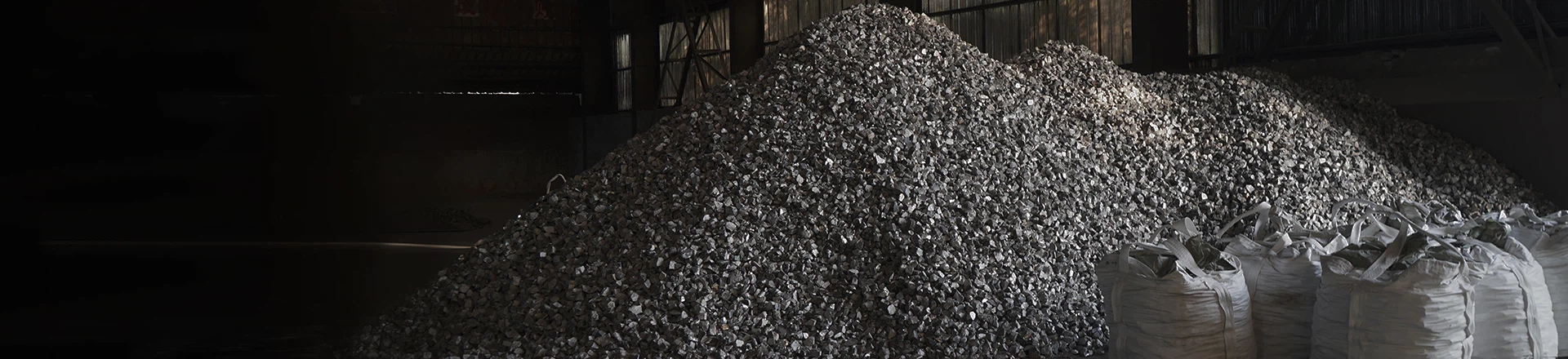
Ferro silicon is an alloy containing silicon and iron, in which the silicon content is usually between 15% and 90%. Due to its unique physical and chemical properties, ferrosilicon plays a key role in many industrial fields, especially in metallurgy and foundry industries. The following will introduce the main uses of ferro silicon and its importance in industry in detail.
1. Manufacturing process of ferrosilicon
Ferro silicon is made by smelting iron ore and silica (such as quartz) at high temperatures in an electric arc furnace. The production process includes the following steps:
Raw material preparation: iron ore and quartz, as well as reducing agents such as coke.
Smelting: The raw materials are placed in an electric arc furnace and heated by electric current to generate high temperatures (usually 1500-1800°C), so that iron and silicon fuse to form ferrosilicon.
Purification and cooling: The molten ferro silicon is poured out of the furnace and crushed and screened after cooling and forming to obtain ferro silicon products of different specifications.
2. The main uses of ferrosilicon
Deoxidizer and desulfurizer:
In steel smelting, ferro silicon is widely used as a deoxidizer and desulfurizer. Since silicon has strong chemical activity, it can combine with oxygen in steel to form silicon dioxide (SiO2), thereby effectively removing oxygen impurities and preventing oxidation defects in steel. This not only improves the quality of steel, but also enhances its mechanical properties.
Nodularizer:
In cast iron production, ferro silicon can be used as a spheroidizer, especially in the manufacture of ductile iron. Adding an appropriate amount of ferro silicon can cause the graphite in cast iron to form spheres instead of flakes, thereby improving the toughness and strength of cast iron. This is essential for improving the performance of cast iron parts.
Alloying agent:
Ferro silicon is also used to produce various silicon steels and alloy steels. For example, in electrical steel, the presence of silicon increases the magnetic permeability and resistivity of steel, thereby reducing energy loss. In addition, ferrosilicon is also used in the production of special steels such as stainless steel, tool steel, and high-temperature alloys to improve the corrosion resistance and high-temperature performance of steel.
Aluminum alloy additive:
In aluminum alloy manufacturing, ferro silicon can be used as an important additive to improve the strength and wear resistance of the alloy. This alloy is widely used in aerospace, automobile manufacturing and other fields.
Chemical industry raw materials:
Silicon in ferrosilicon is also used as a raw material for the production of organic silicon compounds, which are widely used in coatings, sealants, lubricants and waterproof materials.
3. Future Outlook
In the future, as the steel industry moves towards green environmental protection and high-quality development, the demand for high-purity, low-impurity ferrosilicon will further increase. At the same time, the application potential of ferro silicon in new energy materials and high-end manufacturing is also being explored, such as in solar cells and electronic components.
In summary, as a key alloy material, ferro silicon plays a vital role in modern industry. With the continuous advancement of technology and the expansion of application fields, ferrosilicon will continue to play an important role in global industrial production and provide solid material guarantees for the development of all walks of life.


