

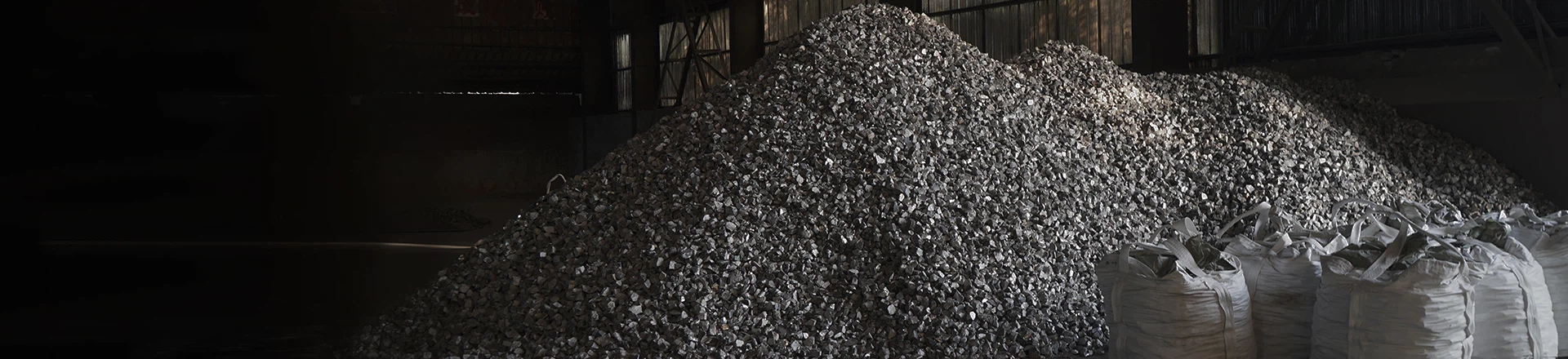
Ferrosilicon is widely used in the steelmaking industry as a deoxidizer and alloying agent. Its primary function is to remove oxygen from the steel during the final stage of steel production, ensuring the desired chemical composition and overall quality. Silicon has a strong chemical affinity with oxygen, making ferrosilicon a highly effective deoxidizer through precipitation and diffusion. Moreover, the addition of silicon to steel enhances its strength, hardness, and elasticity.
Ferrosilicon is also utilized as an alloying agent in certain steel applications. For instance, it is included in the production of electrical steel for transformers, where silicon content ranges from 2.81% to 4.8%. Additionally, ferrosilicon plays a crucial role in improving inclusion shape and reducing the presence of gas elements in molten steel. This innovative technology significantly enhances steel quality, reduces costs, and conserves iron resources, particularly in continuous casting processes. Furthermore, ferrosilicon exhibits desulfurization properties and possesses advantages such as high specific gravity and strong penetration.
In summary, ferrosilicon effectively fulfills the deoxidation requirements of steelmaking while offering desirable features for alloying and improving steel quality.
Furthermore, it is worth mentioning that ferrosilicon powder exhibits a remarkable heat-releasing property when exposed to elevated temperatures, making it a valuable resource in the steelmaking sector. Its primary application involves acting as a potent heating agent for steel ingot caps, a process that significantly enhances the overall quality and recovery efficiency of steel ingots.
The cast iron industry highly relies on the utilization of ferrosilicon as both an inoculant and a nodularizing agent. Cast iron holds significant importance in modern industry due to its economic advantages over steel, including its lower cost, easy melatability, and exceptional casting properties. Moreover, cast iron exhibits superior shock resistance compared to steel and ductile iron, with its mechanical properties approaching or even matching those of steel. To enhance the production of ductile iron, the addition of ferrosilicon plays a crucial role. By incorporating a specific quantity of ferrosilicon into cast iron, the formation of carbides in iron can be prevented while facilitating the precipitation and spheroidization of graphite. As a result, ferrosilicon serves as a vital inoculant, assisting in the precipitation of graphite, and a spheroidizing agent in the production of ductile iron.
High-silicon ferrosilicon, also known as siliceous alloy, is extensively utilized as a reducing agent in the ferroalloy industry for the production of low-carbon ferroalloys. This is primarily due to its exceptional chemical affinity between silicon and oxygen, alongside its minimal carbon content. The utilization of high-silicon ferrosilicon aids in reducing the carbon levels in ferroalloys, making it an indispensable component in the production process of ferroalloys.
The Pidgeon process of magnesium smelting extensively utilizes 75# ferrosilicon during the high-temperature smelting of metal magnesium. This crucial step involves substituting the magnesium in CaO.MgO, and for every ton of metal magnesium produced, approximately 1.2 tons of ferrosilicon is consumed. The significance of ferrosilicon in the production of magnesium metal cannot be underestimated.
Ferrosilicon powder, whether ground or atomized, finds use in a variety of applications beyond its conventional use in metallurgy. For instance, it is commonly employed as a suspended phase in mineral processing to facilitate better separation and concentration of different metal ores. Similarly, in the welding rod manufacturing industry, ferrosilicon powder makes for an excellent coating material that improves the quality of welds and enhances durability. Furthermore, high-silicon ferrosilicon finds use in the chemical industry as a raw material for producing silicone-based products that have exceptional properties like high temperature resistance, water repellency, and electrical insulation. So, whether you work in metallurgy or not, ferrosilicon powder may still have something useful to offer in terms of improving the performance and properties of various products and materials.
The demand for ferrosilicon is driven by its wide range of applications in industries such as steelmaking, foundry, and ferroalloy. These three industries alone consume 90% of all ferrosilicon produced worldwide. The most popular type of ferrosilicon is 75% ferrosilicon, which is widely used in various industries. In steelmaking, around 3-5 kilograms of 75% ferrosilicon is required for every ton of steel produced. Overall, the versatility and reliability of ferrosilicon make it a vital component in many industrial processes.


