

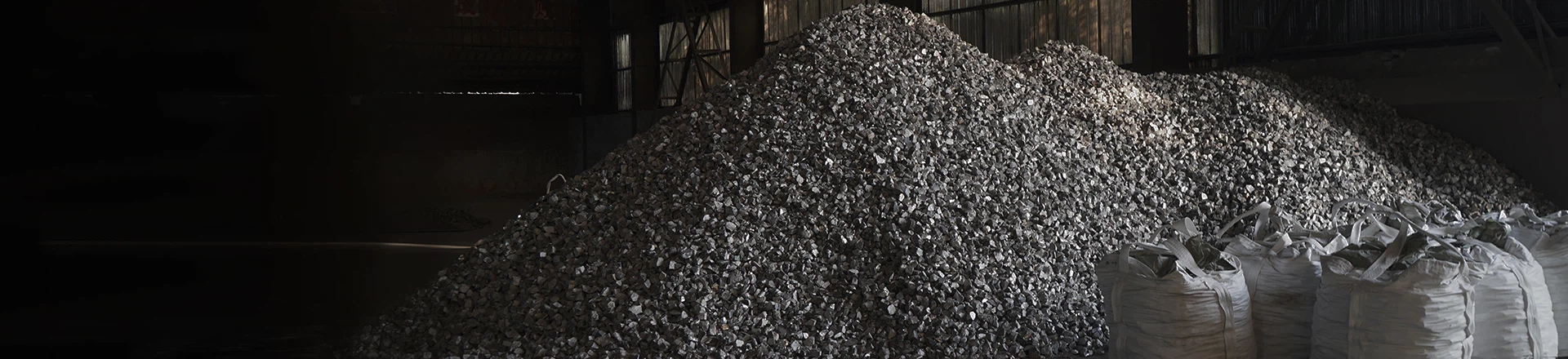
What Is Manganese
Manganese is a chemical element with the chemical symbol Mn, atomic number 25 and relative atomic mass 54.9380. The earliest use of manganese dates back to the Stone Age. As early as about 17,000 years ago, manganese oxides (soft manganese ores) were used as pigments in cave paintings by people in the late Paleolithic period. The Spartans of ancient Greece also found manganese in the weapons they used. The ancient Egyptians and Romans used manganese ore to decolorize or dye glass.
However, it was not until 1774 that the Swedish chemist Johan Gottlieb Gann succeeded in isolating manganese metal from soft manganese ore. He heated powdered soft manganese ore purified by Scherrer and charcoal in a crucible for one hour and obtained button shaped lumps of manganese metal. Bergmann named this new element "manganese". People knew what is manganese.
Manganese is widely distributed in nature and is found in soil, tea, wheat and hard-shelled fruits. Manganese does not exist in nature as a pure elemental monomer, but is often found in the form of minerals formed with iron. It is an important transition metal for industrial use, especially in materials such as stainless steel. Manganese has a density of 7.21 g/cm³, a melting point of 1244°C and a boiling point of 2095°C. It is a silvery-white metal, with a textured surface. It is a silvery-white metal, firm and brittle, easily oxidized in air to form a brown oxide covering.
Manganese has a wide range of industrial applications, especially in steel manufacturing, batteries, chemicals, electronics, and agriculture. It is an important component of materials such as stainless steel and is also used in the manufacture of cathode materials for dry batteries. With the continuous improvement of technology, the annual production of manganese is increasing.


