


Recently, the upstream freight rates in the shipping market have risen significantly. Major carriers such as Maersk, MSC, and CMA continue to raise freight rates for early June shipments to European base ports. The SCFIS Europe index increased compared to the previous week, with the basis narrowing significantly. As of the end of May, the SCFI comprehensive index rose to 3044.77 points, a weekly increase of 12.63%, and the Shanghai-Europe freight rate increased by 9.7% to $3740/TEU.
Since the Red Sea crisis, the price increases by major carriers have continued to be implemented. In early May, the price range for 20GP and 40GP containers rose to $32004200/TEU and $56006800/FEU respectively, an increase of nearly 60%. Among the top 10 carriers by capacity, Maersk, MSC, and CMA together account for 55.1% of the total capacity, having a significant impact on the shipping market. After outlier adjustment of the quotes from these three carriers, the average quotes for various container types in week 22 compared to week 18 increased by 69.3%, 71.7%, 49.8%, 80.5%, 71.6%, and 52.8%, respectively, aligning with the increases in the SCFIS and SCFI Europe indexes. The forecast for the next three weeks indicates no signs of slowing in rate hikes, with the upper limits for 20GP and 40GP containers expected to exceed $4200/TEU and $8000/FEU.
Port Congestion and Rerouting
As of May 28, the number of ships passing through the Suez Canal decreased by 54.2% compared to the same period last year, with the tonnage gap reaching 68.0% (about 3.7 million tons). Some ships chose to reroute via the Cape of Good Hope, although the number of ships and tonnage passing through the Cape increased by 69.0% and 52.8%, respectively, compared to the same period last year, it still cannot fully compensate for the capacity gap of the Suez Canal. Port congestion has led to reduced efficiency and a shortage of empty container inventory, significantly exacerbating delays.
Alphaliner's market weekly report indicates that the container charter market has been very active recently, with a large number of ships being chartered. As of May 31, the charter price for large Cape size ships rose to $27,345/day, the highest level since 2021. Although 600,000 TEU of new ships are expected to be delivered in the next two months, less than 10 of them will be available for charter, leaving room for freight rates to continue rising.
Global Port Conditions
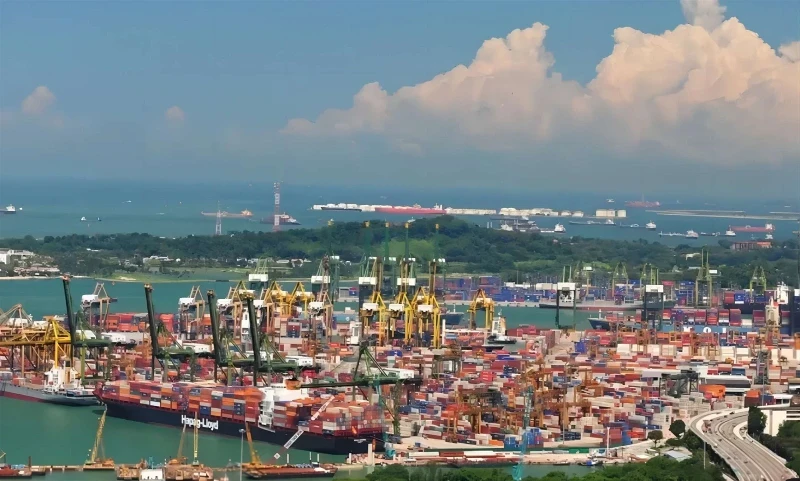
Xeneta reports that some importers have decided to ship early to maintain the stability of their supply chains post-pandemic, leading to increased early shipping activity. The most severe port congestion is in Asia, with Southeast Asian ports accounting for 26% and Northeast Asian ports for 23%. In the first four months of 2024, Singapore's port handled a total of 13.36 million TEU, an 8.8% increase year-on-year. To alleviate congestion, PSA has reactivated the old berths and yards at Keppel Terminal and increased manpower to handle the backlog of containers. Despite increasing weekly handling capacity from 770,000 TEU to 820,000 TEU, about 2 million TEU of global capacity remains stranded outside ports, equivalent to 6.8% of global container ship capacity. Linerlytica points out that congestion has forced some shipping companies to cancel scheduled calls at Singapore, likely exacerbating downstream port issues.
Market Outlook
In the coming months, the global shipping market will continue to face significant challenges. As summer approaches, inventory replenishment demand in the European and American markets may increase, further driving up freight rates. Although some carriers have indicated that the current capacity shortage issue will significantly ease by the end of the year, freight rates are likely to remain high in the short term.
Companies should closely monitor carrier rate dynamics and market supply and demand changes, planning logistics and shipment times in advance. Especially during peak periods, booking slots early and choosing reliable shipping partners will help mitigate risks and ensure supply chain stability. Strengthening communication and cooperation with upstream and downstream supply chain partners is essential to manage potential shipping delays and port congestion issues.
In the current market environment, flexible response and proactive strategy adjustments are key to ensuring smooth business operations. By closely monitoring market trends and planning transportation solutions wisely, companies can maintain a competitive edge in a complex market landscape.
Hope it will help to guide your purchasing plan. If you have any new enquiry, please don't hesitate to contact us at jscferroalloy@jscferroalloy.com. Stay informed with the latest updates!


