


Global Shipping News: Spot Freight Rates Surge, Future Uncertain
This week, spot freight rates have continued to soar, raising deep concerns among shippers about the potential extent of future rate increases. However, no one can currently predict the exact upper limit of these rates.
Market analysts generally believe that freight rates will continue to rise until enough shippers reduce their shipments due to high costs, thus achieving a balance between container demand and vessel capacity. However, the exact threshold for this balance remains unknown.
According to Sea-Intelligence, historical peak levels during the pandemic can be referenced to predict possible rate increases. However, this does not account for the current Red Sea crisis, which has led to increased sailing distances around Africa.
Evaluating the Impact of New Sailing Distances
To more accurately assess this impact, Sea-Intelligence compared the relationship between sailing distances and rates, using cents per nautical mile per FFE as a metric. Their analysis showed that during the pandemic, rates per nautical mile reached exceptionally high levels.
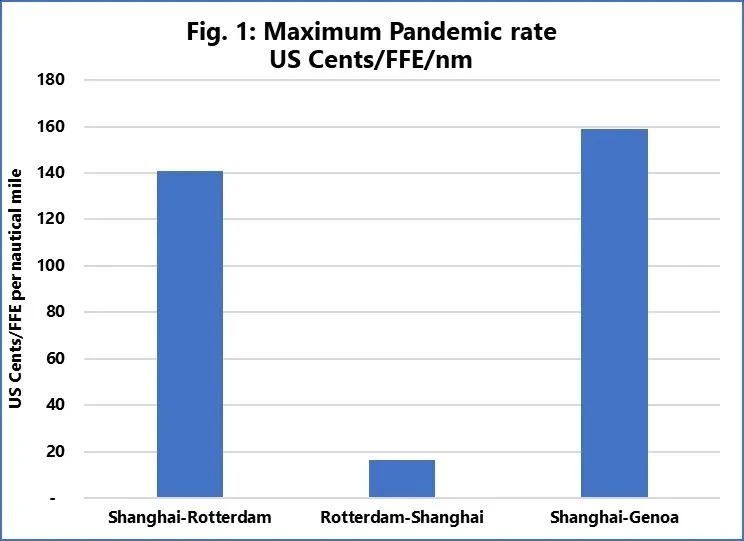
Based on this historical data, Sea-Intelligence estimated the potential spot freight rates per FFE under the current crisis, combining new sailing distances. The results indicated that if per nautical mile rates match pandemic levels, spot rates from Shanghai to Rotterdam could reach $18,900/FFE, from Shanghai to Genoa $21,600/FFE, and return rates from Rotterdam to Shanghai could be $2,200/FFE.
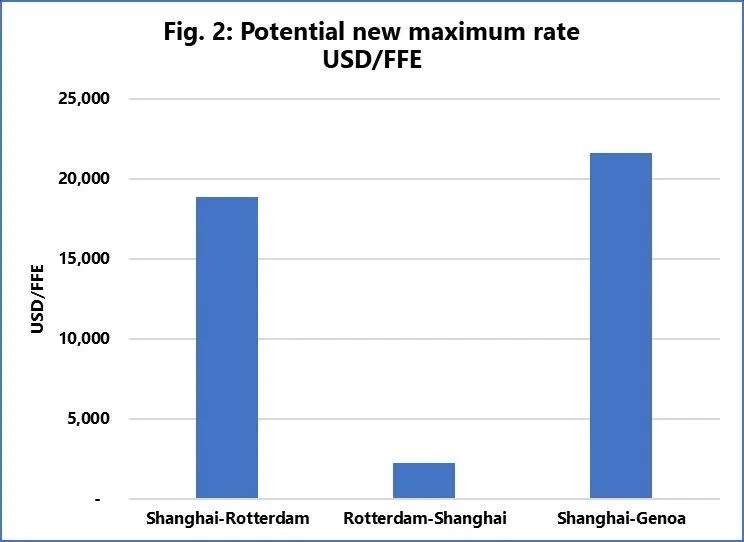
Sea-Intelligence CEO Alan Murphy stated that while this does not mean rates won't rise further, if rates per nautical mile are consistent with pandemic levels, spot rates could reach the aforementioned levels. This prediction undoubtedly presents a significant challenge for shippers.
Impact of Israel-Palestine Ceasefire on Shipping
Even if Israel and Palestine achieve a ceasefire, ships are unlikely to return to the Red Sea quickly. Frontline CEO Lars Barstad stated on Wednesday that while a ceasefire might end the threat of Houthi attacks on ships, shipping companies are unlikely to immediately resume Red Sea routes. He emphasized that there is no concrete evidence that Houthi forces will cease attacks after a ceasefire, making it unrealistic to expect shipping companies to quickly transit the Red Sea or the Gulf of Aden.
Since November last year, Houthi attacks on Red Sea vessels have forced shipping companies to reroute around the Cape of Good Hope, significantly increasing shipping costs and boosting shipping company stock prices. However, following the UN's ceasefire resolution for Gaza on Monday, major container shipping companies saw their stock prices drop, with Maersk and Hapag-Lloyd both falling by 6% since Monday.
Experts Predict Further Increase in Spot Freight Rates
At the TOC Europe 2024 conference this week, shipping industry experts warned about the outlook for spot freight rates. Peter Sand, Chief Analyst at Xeneta, noted that spot rates are expected to rise further due to the Red Sea crisis, port congestion, and a surge in demand driven by tariff war threats. Despite concerns that demand spikes similar to those seen during the pandemic could prompt shippers to act early, mid-June rate increases are expected to be relatively modest but still challenging for shippers.
Lars Jensen, CEO of Vespucci Maritime, stated that container trade has returned to pandemic levels. Current severe congestion at ports in Singapore and the Western Mediterranean is similar to that of pandemic conditions. Soaring ship leasing costs indicate that carriers and shipowners expect problems to persist. Independent carriers are deploying smaller vessels to provide additional capacity in response to rising rates. Regarding the Red Sea crisis, Jensen believes the duration is uncertain, but if demand remains strong, rates could exceed pandemic levels.
Maersk Raises North Europe FAK Rates, Effective July 1
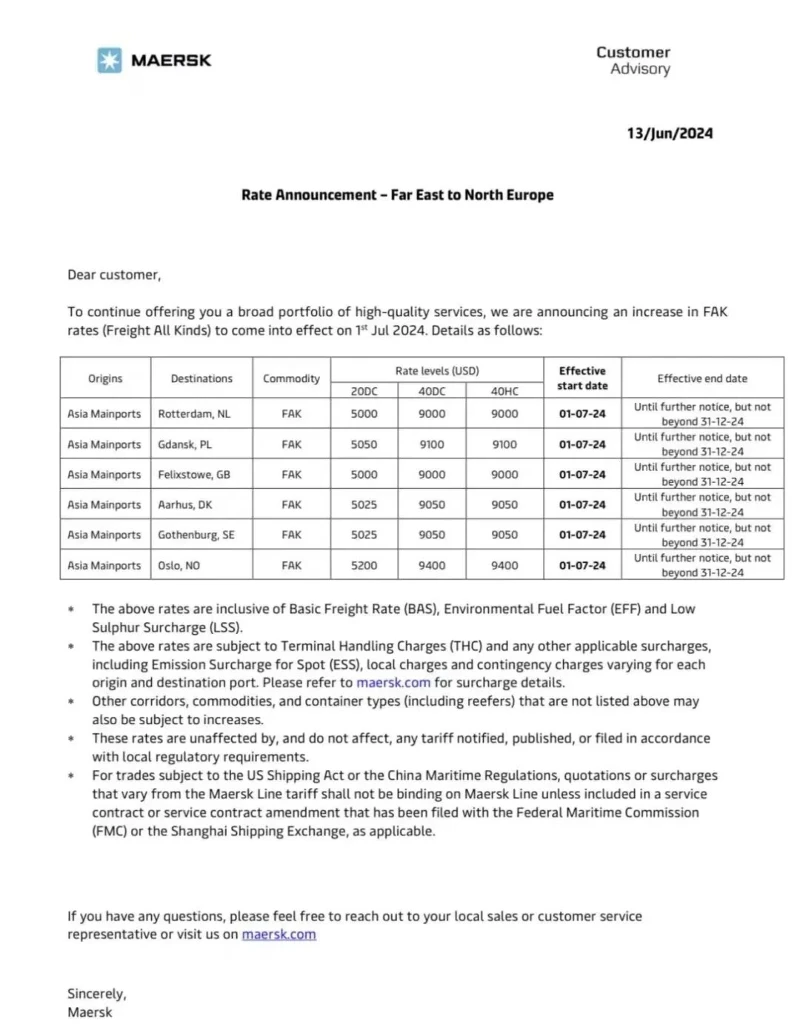
Meanwhile, the shipping market continues to trend upward. On the 13th,Maersk announced an increase in FAK rates on Asia-Europe routes, with rates rising to a maximum of $9,400/FEU, effective July 1. The market widely expects other leading carriers to follow suit with similar rate adjustments. We will continue to monitor this trend closely.
Hope it will help to guide your purchasing plan. If you have any new enquiry, please don't hesitate to contact us at jscferroalloy@jscferroalloy.com. Stay informed with the latest updates!


