

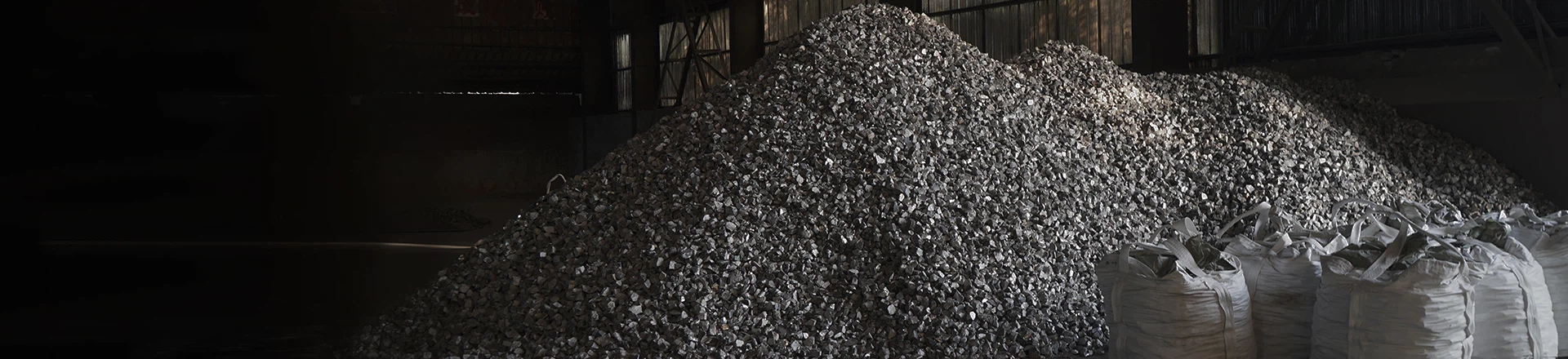

Ferrosilicon is used in steel industry as deoxidizer. During the steelmaking process, to remove harmful impurities such as carbon and sulfur from molten iron, oxygen is introduced through methods like oxygen blowing or the addition of oxidants. Generally speaking, the purpose of oxygen blowing is to oxidize elements like carbon, silicon, manganese, phosphorus, and sulfur in molten iron, forming gases or higher melting point oxides. This reduces the adverse effects of these five elements on steel composition and utilizes the heat released during oxidation to raise the temperature of molten iron. However, this process gradually increases the oxygen content in the steel, predominantly in the form of FeO. Failure to remove oxygen from steel adversely affects the mechanical properties of cast steel billets.
Furthermore, oxygen itself poses several drawbacks in steelmaking:
- Oxygen is one of the main causes of gas porosity in cast steel parts. During the solidification of steel, the solubility of oxygen decreases significantly with decreasing temperature, causing released oxygen to react with carbon in the steel, producing CO bubbles that can form pores if trapped within the steel.

- Excessive oxygen content in molten steel exacerbates the tendency for hot cracking in cast steel. This is because FeO forms eutectic (FeO·FeS) with FeS when they meet, which has a low melting point (940℃) and tends to distribute as a thin film along grain boundaries, thereby promoting hot cracking.
- Oxygen is also a major element contributing to the formation of non-metallic inclusions. It can react with various elements to form oxide inclusions that, if retained in the steel, reduce its performance.
To mitigate these issues, deoxidation is essential after removing impurities from molten iron. Deoxidizers typically include iron alloys containing elements like silicon, manganese, aluminum, and calcium, chosen for their strong affinity with oxygen. During the steelmaking process, ferrosilicon is used in the steel industry as a crucial deoxidizer due to its strong affinity with oxygen. When silicon iron is added during steelmaking, the following deoxidation reaction occurs:
2FeO + Si = 2Fe + SiO₂
The silica produced after deoxidation is lighter than molten steel and floats on the surface, entering the slag and effectively removing oxygen from the steel. This process significantly enhances the strength, hardness, and elasticity of steel, improves its magnetic properties, and reduces hysteresis losses in transformer steel.

In practice, there are two main methods of deoxidizing molten steel:
- Diffusion deoxidation utilizes the diffusion behavior of oxygen in molten steel, where powdered deoxidizers like carbon powder, ferrosilicon powder, calcium silicon powder, aluminum powder, and calcium carbide powder are spread on the slag surface during the refining reduction period. This method reduces oxygen content in slag and disrupts the balance of oxygen solubility between slag and molten steel, facilitating oxygen diffusion from molten steel to slag.
- Precipitation deoxidation involves directly adding chunky deoxidizers such as ferrosilicon blocks into molten steel, where they react with FeO to precipitate. The timing of deoxidation product formation categorizes them into primary (formed immediately upon addition of deoxidizers in the furnace or ladle), secondary (formed in already deoxidized steel before it cools to the liquidus line), and tertiary (formed during solidification between liquidus and solidus lines).
These deoxidation products collectively enhance steel quality and performance.


